
THE COMPLETE SCREENFREE RANGE
School phone pouches and unlocking hardware
Standard and signal-blocking pouches, approved-access options, portable magnets and wall-mounted stations. Everything to run a consistent phone routine, priced per unit with no lock-in.
screenfree supplies the full kit a school needs to manage phones across the day. Three pouches for different needs, two ways to unlock them, and the branding and identification options to make them feel like part of the school. Buy what suits your setup, scale when you are ready.
screenfree pouch range


Portable unlocking magnet


Wall-mounted unlocking station
THE POUCHES
Three pouches, one routine
Every pouch keeps the phone with the student rather than in a collection tray. Standard and signal-blocking pouches lock magnetically, while the approved-access pouch uses a Velcro closure for faster authorised access. The difference between them is what happens while the phone is put away. Also known as phone lock bags, lockable phone pockets or phone lock pouches.
MOST POPULAR
$20
PER UNIT

Signal-blocking pouch
The pouch most schools choose for full-day use. It locks magnetically like a standard pouch, but a Faraday lining blocks cellular, Wi-Fi and Bluetooth while the pouch is properly sealed. The phone is not just locked away, it is fully disconnected. No hotspotting, no tethering, no Bluetooth workarounds, no silent notifications.
BEST SUITED FOR
Whole-day routines, senior students, and schools where students have found ways around a standard pouch.
The difference that matters: a standard pouch manages whether a phone is visible. A signal-blocking pouch manages whether it is connected. More on how signal-blocking works.
Options: custom logo and colour,
ID card holder (+$2), naming strip (+$1).
THE POUCHES
CORE OPTION
$16
PER UNIT

Standard pouch
A magnetic locking pouch for daily use. It physically restricts access to the phone for the duration, with no apps and no tech required. It does not block wireless signals, so a determined student can still receive notifications or attempt a connection while the phone is sealed.
BEST SUITED FOR
Schools focused on removing the phone from a student's hand where hotspotting is not a concern.
The difference that matters: this is the lower-cost option and it does the core job of keeping the phone locked and out of use. See which suits your school.
Options: custom logo and colour, ID card holder (+$2), naming strip (+$1).
APPROVED OPTION
On request

Approved-access pouch
For medical and approved-access needs
A Velcro-closure pouch for students with approved medical, accessibility, wellbeing or other access arrangements. It keeps the student inside the same routine as everyone else while allowing faster authorised access when an arrangement requires it.
BEST SUITED FOR
The small number of students at most schools who hold an approved arrangement for quicker or supervised phone access.
A note on what it is: a practical part of the pouch routine, not a medical device. It exists so exceptions are handled consistently.
Pricing confirmed alongside your quote.
UNLOCKING HARDWARE
Two ways to unlock
A locked pouch needs a way back open. Schools use portable magnets, fixed wall-mounted stations, or both. The right mix depends on how the day runs.
$80
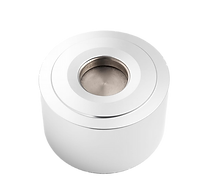
Portable unlocking magnet
A handheld magnet that releases the lock in seconds. Staff carry it, so the unlock point goes wherever they are. One magnet opens every pouch.
Why schools choose it: flexibility. Wherever a staff member is, the unlock point is too.
$115


Wall-mounted unlocking station
A permanently mounted unlocking point for a controlled location. Students tap the lock area or back of the pouch against the station, release it, and carry on. Available in white and black. All locks are the same, so a single key can be used for multiple stations.
Why schools choose it: consistency and reduced staff load when most pouches open at once.
CHOOSE THE SETUP
Which unlocking setup suits your school
Most schools settle on one of three approaches. The right one depends on your numbers, your exits and how your day ends, not on a fixed rule.
01
Portable magnets only
Maximum flexibility. Staff unlock pouches across classrooms, offices and exits. Best where several staff need access in different places throughout the day.
02
Wall-mounted stations only
Smoother self-service at a fixed point. Best for predictable, single-exit dismissal where most pouches open at the same time and place.
03
Hybrid setup
A wall-mounted station handles the main end-of-day flow, while portable magnets cover early departures, wellbeing, classrooms and exceptions.
Planning guidance: schools often work to roughly one unlocking point per 15 to 25 students as a starting point. Treat that as a guide, not a requirement. Student numbers, exits, end-of-day flow, unlocking locations and the use of portable magnets all affect the final setup. See how schools roll this out.
CUSTOMIZATION
Branding and identification
Pouches can be made to feel like part of the school and to double as a daily-carry item. Four options, kept simple.
School logo and colour
From $1 per pouch at volume
Your crest or logo printed on each pouch, with pouch colour matched to your branding. Subject to setup and MOQ.
ID card holder
+$2 per pouch
A clear ID window for quick visual identification. It does not affect signal-blocking.

ID card holder

Naming strip
Naming strip
+$1 per pouch
A white printed strip showing a student name or ID. Available on request.
Configuration support
Included
Your crest or logo printed on each pouch, with pouch colour matched to your branding. Subject to setup and MOQ.
TRANSPARENT PRICING
Pricing at a glance
All prices in AUD per unit. One-time purchase, no subscription, no program contract. Shipping included on Australian school orders over $1,000.
ITEM
PRICE
Signal-blocking pouch
$20 per unit
Standard pouch
$16 per unit
Approved-access pouch
On request
Portable unlocking magnet
$80
Wall-mounted unlocking station
$115
ID card holder
+$2 per pouch
Naming strip
+$1 per pouch
Custom logo and colour
From $1 per pouch at volume
WHAT SCHOOLS ARE SEEING
Wanted by students. Preferred by staff.
"Some students asked where they could buy a pouch, because they wanted one at home to lock up their own phone.
Lindy Grahn, Head of Larkin Centre
Penleigh and Essendon Grammar School
NEXT STEP
Try it, or price it
Two ways forward depending on where you are. Most schools start with a sample pack and move to a quote once staff have had a look.
PRODUCT QUESTIONS
Common product questions
Which pouch should our school choose?
Most schools choose the signal-blocking pouch for full-day use, because it blocks connectivity rather than just locking the phone away. The standard pouch is the lower-cost option where hotspotting is not a concern. The approved-access pouch covers students with an agreed arrangement for quicker access.
Do we need portable magnets, wall-mounted stations, or both?
It depends on how your day ends. Portable magnets give staff flexibility to unlock anywhere; wall-mounted stations create a smooth self-service point for predictable dismissal. Most established schools run a hybrid.
Can the pouches be branded and individually identified?
Yes. Pouches can carry your school logo and colours, subject to a minimum order. For identification, add an ID card holder or printed naming strip. See common operational questions.
How much do school phone pouches cost in Australia?
screenfree pouches start at $16 per unit for a standard lockable pouch and $20 for a signal-blocking pouch, in AUD, as a one-time purchase with no subscription. Unlocking hardware is $80 for a portable magnet or $115 for a wall-mounted station, and branding starts from $1 per pouch at volume. Shipping is included on Australian school orders over $1,000.
What's the difference between a phone pouch, a phone lock bag and a lockable phone pocket?
Nothing. They're different names for the same product. Media coverage tends to say lockable phone pockets; schools usually say pouches or lock bags. Whatever you call them, the questions that matter are whether they lock and whether they block signal.